From the source
How it works
- Local cost facts support focused service and location questions. Editors check locality, clarity and usefulness.
- Brand guidance can support separate Angi and HomeAdvisor versions. International adaptation is described as a pilot, not an achieved rollout.
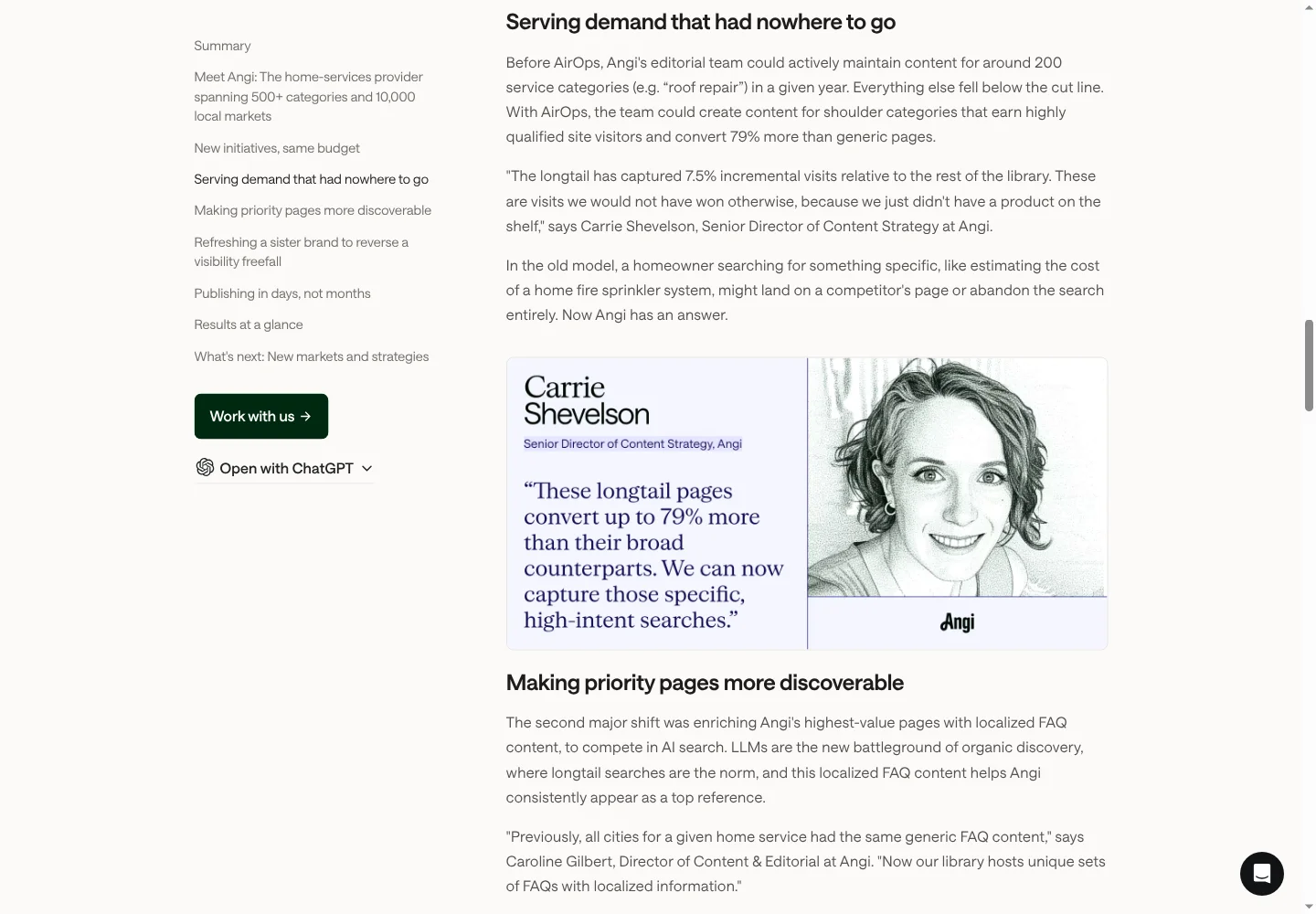
- The case reports longtail pages converting up to 79% better than generic category pages, plus doubled high-priority localized-FAQ coverage over two quarters.
- The conversion event, baseline rate, page counts, sample size and conversion window are not disclosed. Differences in intent can explain conversion differences.
- FAQ coverage is not measured traffic or conversion growth. Public plan information does not establish Angi's costs or access to its data.
Results
AirOps's customer case reports that Angi's longtail pages convert up to 79% better than generic category pages. Longtail pages address specific service or location questions. The case also reports doubled high-priority localized-FAQ coverage over two quarters. Angi content leaders describe the program. The conversion event, baseline rate, page/sample counts and conversion measurement window are absent. FAQ coverage and conversion are distinct measures.
Workflow guide
Choose unanswered service/location questions and record baseline qualified service-request conversions.
Retrieve dated local cost facts through approved sources. Exclude household identifiers.
Draft focused pages and FAQs using supplied templates and brand rules. Keep drafts separate from the production CMS.
Ask editors to verify locality, costs, clarity and usefulness against the sources.
Require human approval before separately authorized publication or production merges.
Compare qualified request conversion rates for matched service/location groups. Track visits, uncertainty, fact errors and editor time. Track FAQ coverage separately.