From the source
How it works
- The workflow gathers audience, purpose and context before drafting and refinement.
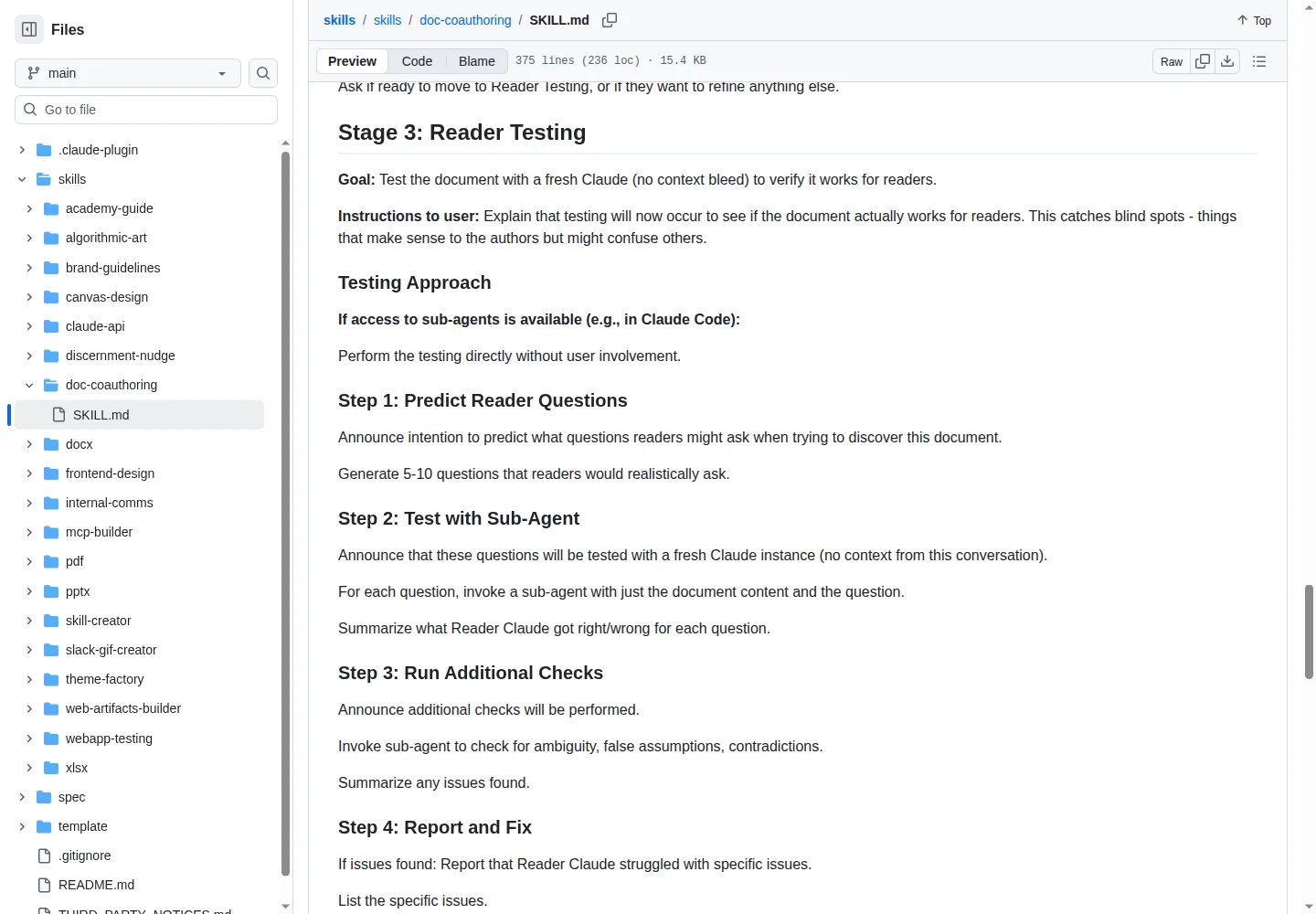
- Five to ten realistic questions are tested with only the document and questions in a fresh model context. A separate conversation is the manual fallback.
- Reader testing looks for ambiguity, assumptions and contradictions, then returns weak sections for revision.
- The reader model can share the drafting model's misconceptions. Consistent answers do not prove factual correctness.
- An owner must check facts, links and technical claims. Human-reader testing remains separate; no comprehension improvement was measured.
Workflow guide
Define audience, purpose, required decisions and authoritative sources. Draft with the owner's context. Remove confidential material not needed for testing.
Prepare five to ten realistic reader questions, including edge cases. Have the owner approve an answer rubric against explicit sources of truth.
Give a fresh sub-agent only the document and questions. If unavailable, use a new conversation with those limited inputs. Keep reference answers and drafting context out of it.
Check answers for errors, ambiguity, assumptions and contradictions. Propose section revisions. Apply only owner-approved edits before repeating the same questions.
Compare original and revised drafts on the fixed question set. Record correctness, unresolved assumptions, revision cycles and human-reader success.
Have the owner verify facts, links, technical claims and intended impact before publication or consequential use.