From the source
How it works
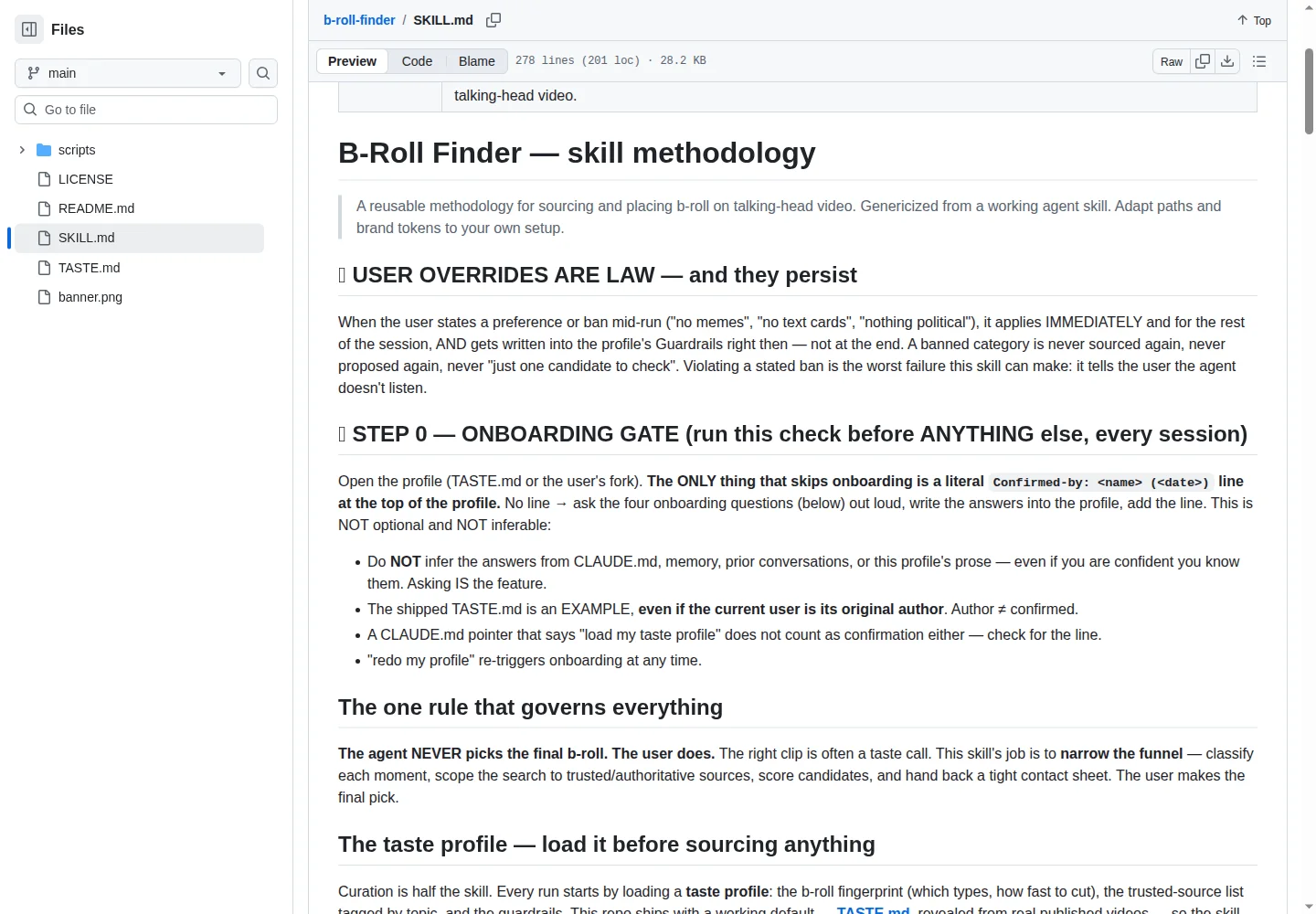
- Confirm the current user's preferences before sourcing. Propose an annotated passage plan and obtain approval; the user selects the final cutaways.
- Use approved sources and record each asset's rights and platform restrictions. A public asset is not automatically licensed for reuse.
- Helper code describes optional placement and frame checks. Source inspection is not evidence of an executed render or factual accuracy.
- Replace broad standing-access assumptions with explicit minimum permissions. Require separate approval for downloads, paid sourcing, generated media, installation and publication.
- The author's speed and composition anecdotes are not outcome statistics. No workflow or video pipeline was run.
Workflow guide
Confirm visual preferences, audio choices, attribution style, cutaway frequency and permitted source categories. Do not treat the author's example preferences as consent.
Read the authorized transcript and propose a plan for specific spoken passages before downloads. Distinguish literal footage from abstract illustration.
Search only approved sources with the minimum required access. Check candidate relevance, reuse rights and platform terms. Obtain separate approval for paid sourcing, generated imagery and dependency installation.
Present alternatives where taste matters. Record the user's final asset selections.
After separate approval, use provided rendering scripts in an isolated copy. Place selected cutaways on relevant words. Check midpoint frames and joins before human release approval.
Compare a fixed passage sample with a manual sourcing baseline. Log minutes, rejected candidates, rights records, placement defects, factual mismatches and unwanted asset categories.