From the source
How it works
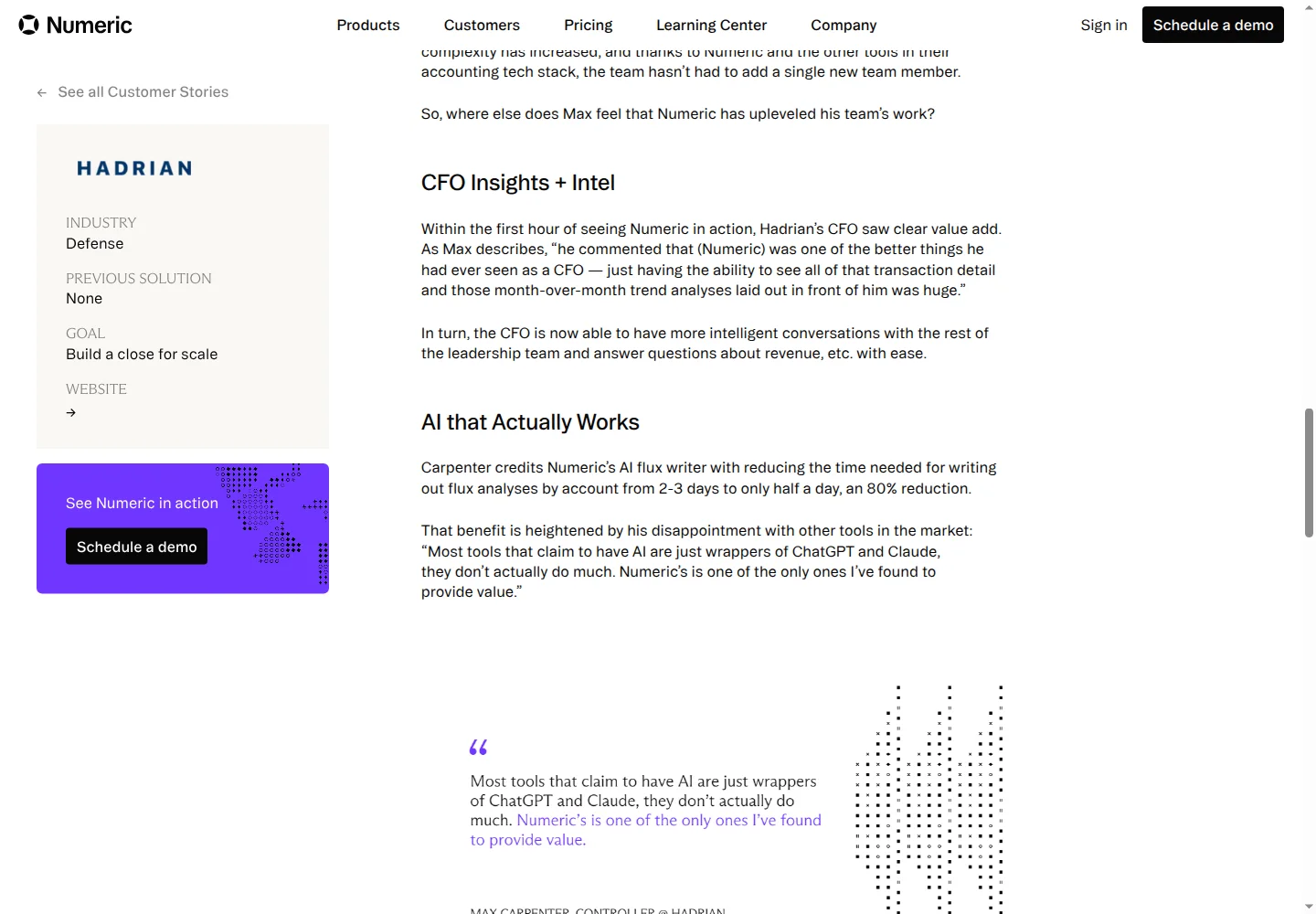
- Max Carpenter reports writing time changing from two to three days to half a day. Numeric characterizes this as 80%. No timed trial, account count or comparison window is supplied.
- The overall close changed from 15 days to five over about a year. This broader process result cannot be attributed to the AI writer alone.
- The original record concerns financial close, not a direct order-to-cash stage. Draft variance explanations still require evidence and controller review.
Results
In Numeric's customer account, Hadrian controller Max Carpenter credits the AI flux writer with reducing account-analysis writing time from two to three days to half a day. The article characterizes this as an 80% reduction. It also reports the overall close moving from 15 to five days over about a year. That result credits Numeric alongside broader accounting changes and cannot be attributed to the AI writer alone.
Workflow guide
Import permitted ledger balances and journal details into an access-controlled close workspace.
Define comparable accounting periods and account owners. Set materiality thresholds, the levels that require explanation.
Draft account variance explanations. Trace each proposed driver to underlying transactions.
Resolve unsupported explanations and exceptions in the workpaper.
Have the controller approve explanations and reconciliations before external reporting.
Compare fixed equivalent account writeups with the current process. Record writing time, reviewer revisions, unsupported claims and on-time approved workpapers.