From the source
How it works
- Ilias Ism groups the Railway strategy into four parts: AI recommendations, low-friction agent access, shared marketing research and automated GTM systems.
- His interview summary reports one growth marketer and one product marketer in a seven-person GTM team. He describes a shared channel for studying Ramp's marketing.
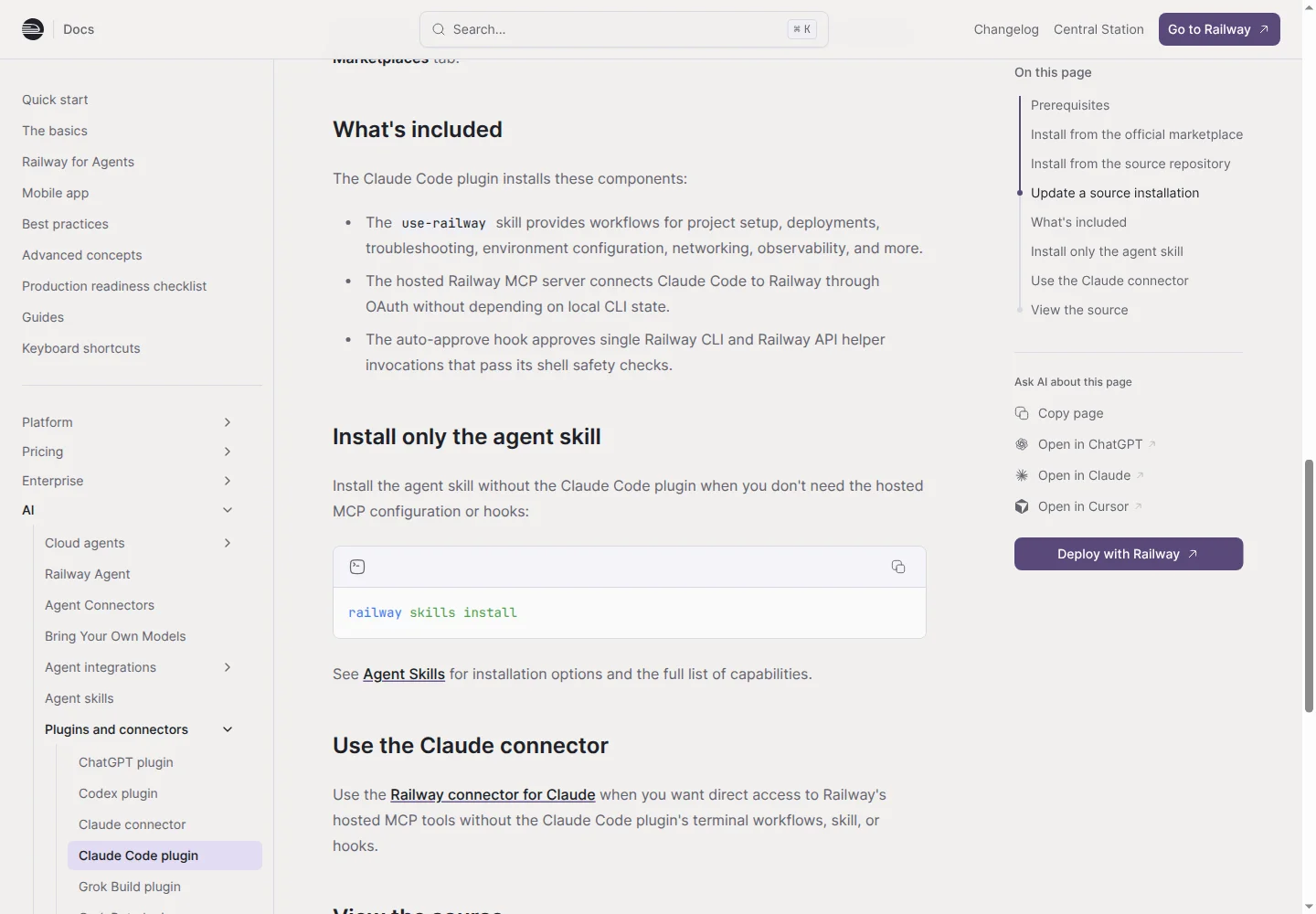
- Railway's public guides expose a CLI, MCP connections and agent skills. Its documentation index links task guides and plain-text pages.
- Ilias links AI SEO Tracker to record recommended products and cited pages. He links LinkDR for managed backlinks. These are his suggested products, not an identified part of Railway's stack.
- The public LinkDR skill describes planning a link order, reviewing the target page and paying in the app. Railway's agent guide documents setup and authentication.
Results
Amplifying reports an 81.8% average Railway recommendation rate for one Python project across three Claude model groups. Its deployment category has 112 extractable responses and allows multiple picks. This is not 82% of all Python apps. Ira Bodnar links the content strategy to revenue growth, but the supplied sources do not establish that cause. A founder interview post reports annual recurring revenue (ARR) rising from $20M to about $100M. That is company-level context, not measured AI-SEO revenue.
Workflow guide
Select five buyer questions for one deployment task. Save baseline answers with model names, dates, recommended products and cited URLs. Use manual records or an approved tracking tool.
Review the cited comparison pages and documentation. Record missing facts about your product. Share useful competitor examples in one marketing research channel.
Draft a task guide with requirements, setup, costs, checks and rollback steps. Prepare a plain-text version and a documentation index. Get approval before publishing.
Map the next action after an AI recommendation. Choose a documented CLI, MCP connection or skill. Specify authentication, permissions and cost limits. Test only on an authorized safe application.
Create a small reporting system that combines the saved answers, citation gaps and task results. Give each proposed change an owner. Keep outreach drafts and any paid placement plan for human review.
Repeat the same questions with recorded model versions. Compare recommendations, citations and successful test deployments. Track referred visits and signups separately from company revenue.
Sources and downloads
- Railway: Railway Documentation
- Railway: Claude Code plugin
- Railway: Railway Skills
- Amplifying: Deployment | Amplifying
- Ira Bodnar on X: Railway hacked AI SEO
- Nakul Mandan on X: Railway started the year at $20M ARR. It’s now ~$100M.
- Ilias Ism on X: Railway's GTM playbook
- Ilias Ism / MagicSpace: AI SEO Tracker
- LinkDR: LinkDR agent skill
- Railway: Railway for Agents