From the source
How it works
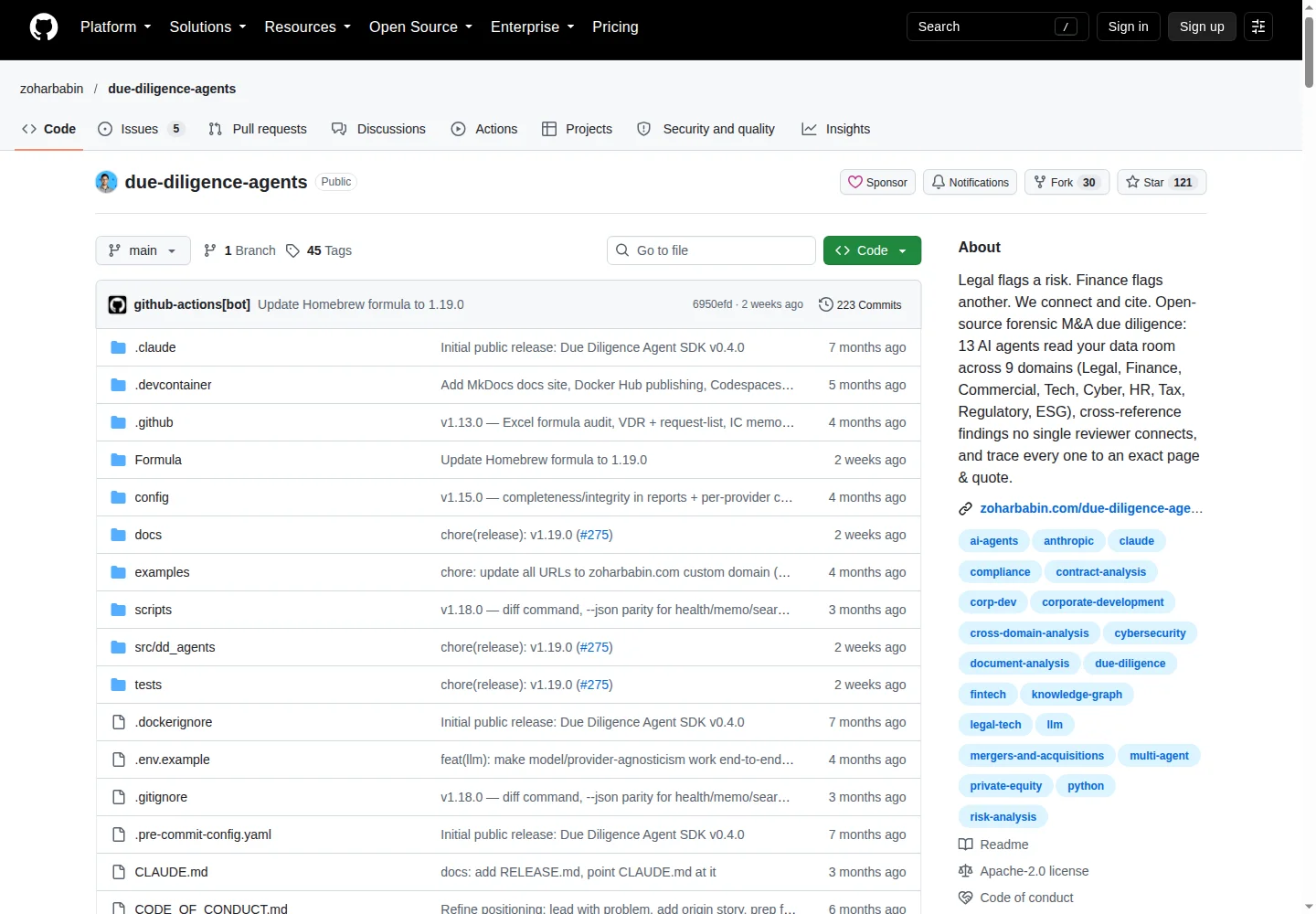
- The source describes blocking quality gates, source citations and HTML, spreadsheet and JSON reports. Gates and quotation checks do not establish legal correctness or completeness.
- The author reports use on completed acquisitions, but supplies no named deal benchmark, reviewer-time study or independent accuracy result. README industry statistics are not this tool’s results.
- Project Atlas is explicitly synthetic. Python 3.12 or later and approved model access are needed. Local orchestration does not by itself establish local model processing.
- Core code uses Apache 2.0. The optional PDF dependency includes AGPL-licensed PyMuPDF. Document permissions, extraction checks and professional advisor review remain necessary.
Workflow guide
Start with synthetic Project Atlas. Organize any approved data room by subject or counterparty. Define the buyer, target and review scope.
Validate configuration and review a dry-run plan before model spending. Check document completeness and extraction quality.
Run specialist analyses and cross-domain synthesis on permitted material. Attach findings to exact source evidence.
Inspect blocking quality gates, citation checks and structured reports. Have qualified legal, financial and technical advisors resolve exceptions.
Compare a fixed advisor-reviewed room with its material-issue baseline. Record issue recall, quote fidelity, extraction omissions, review minutes and run cost.
Retain the audit trail and reviewed conclusions. Block release while material evidence is unresolved. Do not treat automated recommendations as authority to acquire, invest or move money.